Top Stories
Mining
Local ASM leaders hail European tour
November 18, 2026 / Chisomo Phiri
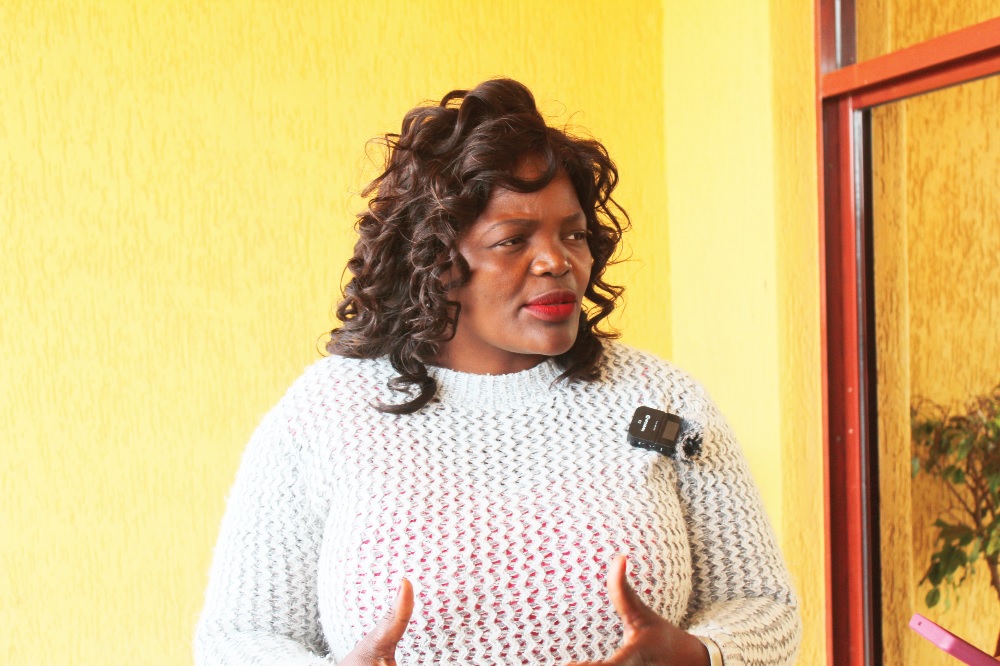
The Federation of Artisanal and Small-Scale Mining in Malawi (FASMIM) and the Malawi Women in Mining Association (MAWIMA) have hailed their tour of Germany, Belgium and France, describing the European outing as an opportunity to open new markets, attract investment and strengthen Malawi’s Artisanal and Small-Scale Mining (ASM) subsector.
The mission that commenced on October 19 to October 31, 2026, brought together representatives of eight associations and enterprises under FASMIM for exhibitions, networking, Business-to-Business (B2B) meetings, potential Memoranda of Understanding and educational visits.
The participating organisations included the Gemstone Association of Malawi, Malawi Women in Mining (MAWIMA), Blantyre Mining Association, Nyasa Mining Cooperative Society Limited, Gold Miners Association, PL Treasurers Limited, Clay Designs and Jeka Quartz Mine.
FASMIM President Percy Maleta said in an interview with Mining & Trade Review that the delegation’s participation is a strategic mission aimed at connecting Malawian ASMs to international markets and positioning the country’s mineral sector for greater business opportunities.
Maleta said the delegation was constituted through an invitation extended to capable ASMs across Malawi to ensure meaningful representation of the sector.
“This is not just a trip for ASMs, it is a strategic mission to open doors for Malawi’s entire ASM subsector and position our miners on the international stage,” said Maleta.
He said FASMIM is looking forward to showcasing Malawi’s mineral potential, meeting international buyers and investors, establishing business partnerships and learning from countries with experience in mineral trading, processing and value addition.
Maleta said the federation wants to help Malawian miners move beyond exporting raw minerals towards developing businesses that generate greater value, employment and income for local communities.
He said the delegation was particularly interested in identifying reliable gemstone buyers, international investors, jewellery manufacturers, mineral-processing technology providers and institutions willing to partner with Malawian miners.
Maleta said the federation also has hope to learn international best practices in formalisation, mineral traceability, quality assurance, environmental management and value addition.
Maleta said FASMIM will follow up on contacts made during the mission, pursue proposed MoUs and share the knowledge gained with its member associations upon returning to Malawi.
He called on government and development partners to support the sector with appropriate financing, modern technology, geological information, skills development, market access and a predictable regulatory environment.
Maleta said strengthening local processing and value addition will help ensure that more of the wealth generated from Malawi’s mineral resources remains in the country.
He said empowering ASMs to operate professionally and compete internationally contributes significantly to job creation, exports, rural development and national economic growth.
MAWIMA President Ashley Simbeye described the opportunity to participate in the mission as a great honour and a significant milestone in the association’s efforts to empower women in mining.
Simbeye said the trip has helped to raise the visibility of women in mining and ensure their meaningful participation in international discussions, business partnerships and investment opportunities.
She said MAWIMA views the mission as an opportunity to amplify the voices of women in mining and demonstrate that women are not merely participants in the mining industry but also entrepreneurs, producers and innovators capable of contributing to Malawi’s economic development.
“Our primary objective is to explore opportunities that can transform the participation of women in Malawi’s ASM from basic mineral extraction to profitable, sustainable and value-added businesses,” said Simbeye.
She said the association has established connections with international gemstone buyers, jewellery manufacturers, investors, equipment suppliers and other players across the mining value chain.
Simbeye said MAWIMA is eager to learn about gemstone identification, grading, cutting, polishing, jewellery manufacturing and mineral value addition, as well as affordable technologies that can improve productivity, safety and environmental management at mining sites.
She said the association also wants to explore technical partnerships, training opportunities and potential MoUs with institutions that can help women in mining develop commercially viable businesses.
Simbeye said MAWIMA intends to showcase Malawi’s gemstone potential, including for rhodolite garnet and other semi-precious gemstones, while demonstrating the role women should play in transforming locally sourced minerals into finished jewellery and other high-value products.
She said investing in women in mining would help unlock the country’s mineral potential by creating employment, increasing local value addition and strengthening rural livelihoods.
Upon returning to Malawi, she said, MAWIMA plans to share the knowledge gained through training, knowledge-sharing sessions and regional engagements to ensure that benefits from the tour reach the grassroots.
Simbeye said the association wants to encourage women to form stronger business networks and cooperatives to improve their bargaining power and access to markets.
She said MAWIMA will also pursue opportunities for technical training, financing, equipment support and business development while advocating for greater inclusion of women in mining policies and investment initiatives.
Simbeye said the association wants to establish sustainable partnerships rather than pursue one-off transactions, emphasising the importance of helping the female ASMs meet quality standards, understand market requirements and comply with applicable licensing and responsible sourcing requirements.
“Our vision is to build a stronger, more inclusive and commercially viable mining sector in which women are connected to markets, participate in value addition, own successful enterprises and benefit fairly from Malawi’s mineral wealth,” she said.
Share this:
Leave a Comment
Comments
Mining & Trade Review News
Agribusiness News
Subscribe to Newsletter
Rehabilitation:
The establishment of a stable and self-sustaining ecosystem, but not necessarily the one that existed before mining began. In many cases, complete restoration may be impossible, but successful remediation, reclamation, and rehabilitation can result in the timely establishment of a functional ecosystem.
Archives
Remediation:
The cleanup of the contaminated area to safe levels by removing or isolating contaminants. At mine sites, remediation often consists of isolating contaminated material in pre-existing tailings storage facilities, capping tailings and waste rock stockpiles with clean topsoil, and collecting and treating any contaminated mine water if necessary.
Stakeholders Logos